


The Canadian love affair with homeownership continues despite the pandemic-mandated lockdown in many parts of the country, with year-over-year sales volume and housing prices in the Greater Toronto Area rising 50 per cent and 15.5 per cent, respectively, in January. That sales and prices grew at rates significantly higher than during comparable periods before the pandemic reveals how much Canadians value investing in housing.
As a result, forecasts of a double-digit drop in housing prices have grudgingly given way to optimistic outlooks. The Toronto Regional Real Estate Board is predicting that the average home price in Toronto will for the first time cross the $1-million mark during 2021.
The gold rush in housing is not just confined to the biggest urban regions. Smaller towns such as London, Ont., are also witnessing unprecedented demand. Housing prices there rose in January by more than $50,000, an increase of 9.4 per cent in just a month.
But some pundits believe this sustained love of real estate spells trouble for the economy and may pose significant financial risks to the households.
“We’ve resumed, after a brief cooldown, plowing a ridiculous amount of money into assets that do nothing to improve the country’s ability to generate wealth,” Financial Post columnist Kevin Carmichael recently wrote, adding that instead of investing in digital technology, like the rest of the smart world, Canada is investing in housing.
Furthermore, such high growth rates in housing prices are not sustainable. Yet households are not dissuaded by the possibility of overpaying for an asset that may stop appreciating or lose value in the future.
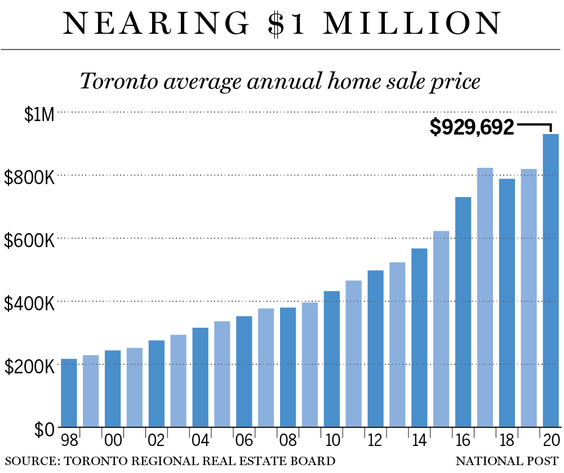
The increased investment in housing is neither accidental nor speculative. Canadian households are responding to incentives by investing in sectors of the economy that allow them high leverage. Canadians can borrow millions to invest in housing by putting down just 20 per cent of a dwelling’s purchase price. First-time homebuyers can borrow up to 95 per cent of the price.
Both borrowers and lenders feel encouraged to be part of the market as housing prices have steadily risen over the past few decades, but what is the alternative to investing so much in housing? Should Canadians invest less by buying cheaper (smaller) properties or forgo homeownership altogether and adopt the renter-for-life model?
A quick look at the demographics reveals that the average household income of renters lags far behind homeowners. Furthermore, the forced savings of homeownership accumulate as equity that provides an additional cushion at retirement. The lure to be a stakeholder in the housing market is, therefore, too strong to ignore.
Perhaps the reason why predictions of a housing market decline have failed to materialize is that the pundits have underestimated the innate desire for homeownership.
Housing prices and sales have accelerated even during the pandemic in and around Canada’s populous urban centres, where immigrants are the dominant population growth source. To expect that immigrants would travel thousands of miles to be renters for life is likely one assumption that has misdirected housing market forecasters.
Furthermore, research has demonstrated that investing in housing enables immigrants to close the wealth gap with the Canadian-born population in a span of only 17 years.
Source: Financial Post